05 / Helm

Mobile helm

The helm runs as a web page, opened on a tablet or a phone and held in landscape. It is for use when the operator is away from the watch station.
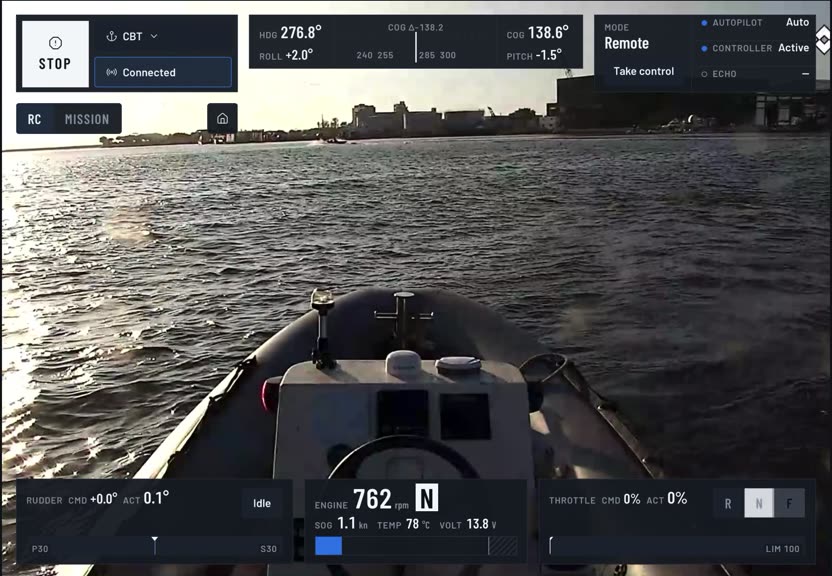
The helm running on a tablet: the vessel's forward camera fills the screen, with heading, roll and course along the top, mode and controller status at the top right, and rudder, engine and throttle panels across the bottom Remote control
Steering from the tablet during a harbour sea trial in 2026. The readings are that instant of that run — they are not a specification.
Uplink
Authenticated encryption over UDP. The key is derived from a passphrase, not shipped in the client.
Replay
Sequence and session replay protection.
Authority
Single-vessel interlock and autonomy-handover sequencing, enforced by the shore backend.
Deployment
Served by the shore station itself. No extra server to run.
The part worth saying out loud

The mobile helm uses the same encryption, the same interlock and the same handover rules as the joystick at the watch station. No part of the control path was relaxed for it.
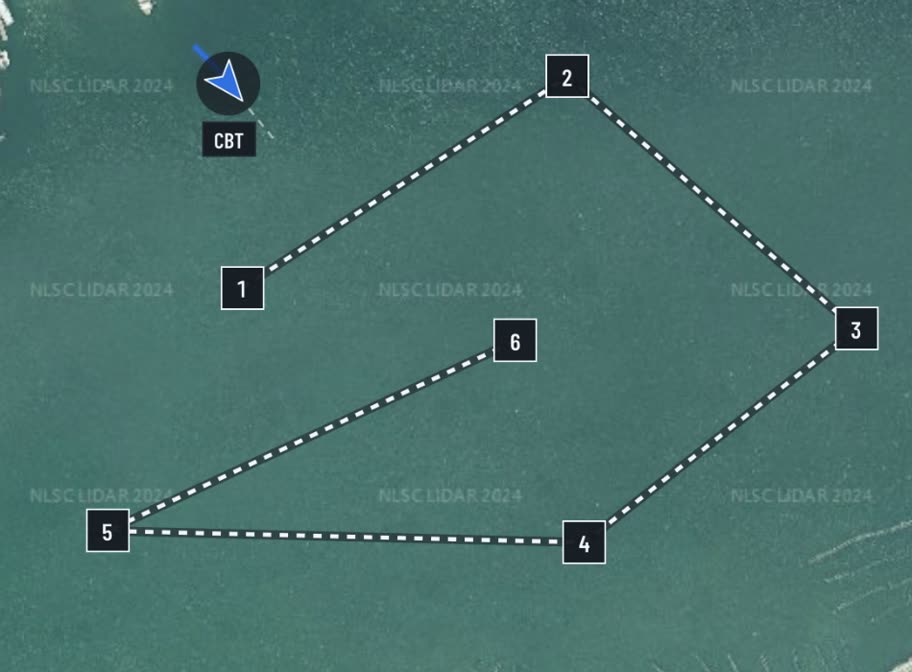
The tablet chart during planning: six numbered waypoints joined by a dashed route over open water, with the vessel marker to one side Planning, as recorded
The route being placed on the tablet’s chart, recorded during a harbour sea trial in 2026. The waypoint list, which carries each point’s position, is off the left of this crop. Base map: NLSC, Ministry of the Interior
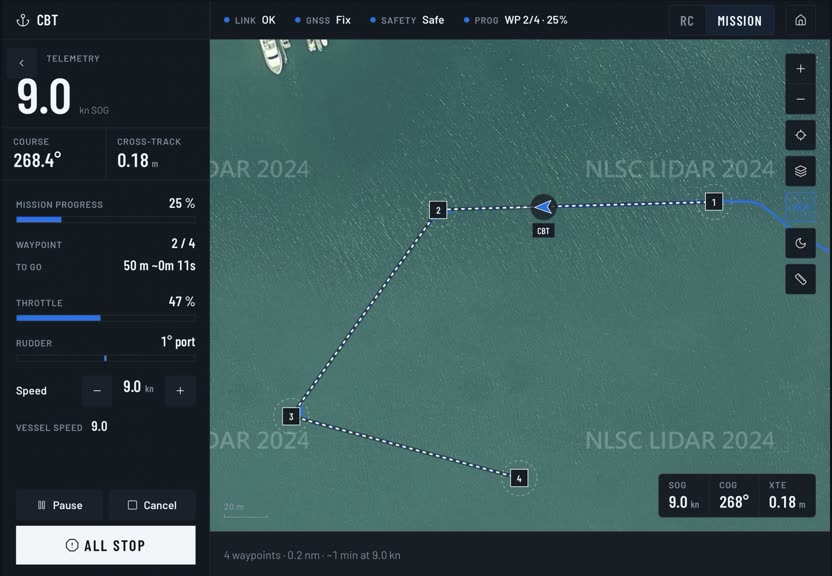
The tablet following a dispatched route: the vessel marker moving between numbered waypoints, with progress, waypoint count and cross-track error on the left Under way · 4× speed
The same tablet following the dispatched route. Progress, waypoint count and cross-track error update as it runs. Recorded in 2026 and shown at four times speed. Base map: NLSC, Ministry of the Interior